


Water Trucks 101: Dust Control Compliance on Job Sites
October 12, 2026 - 9:41:18 am
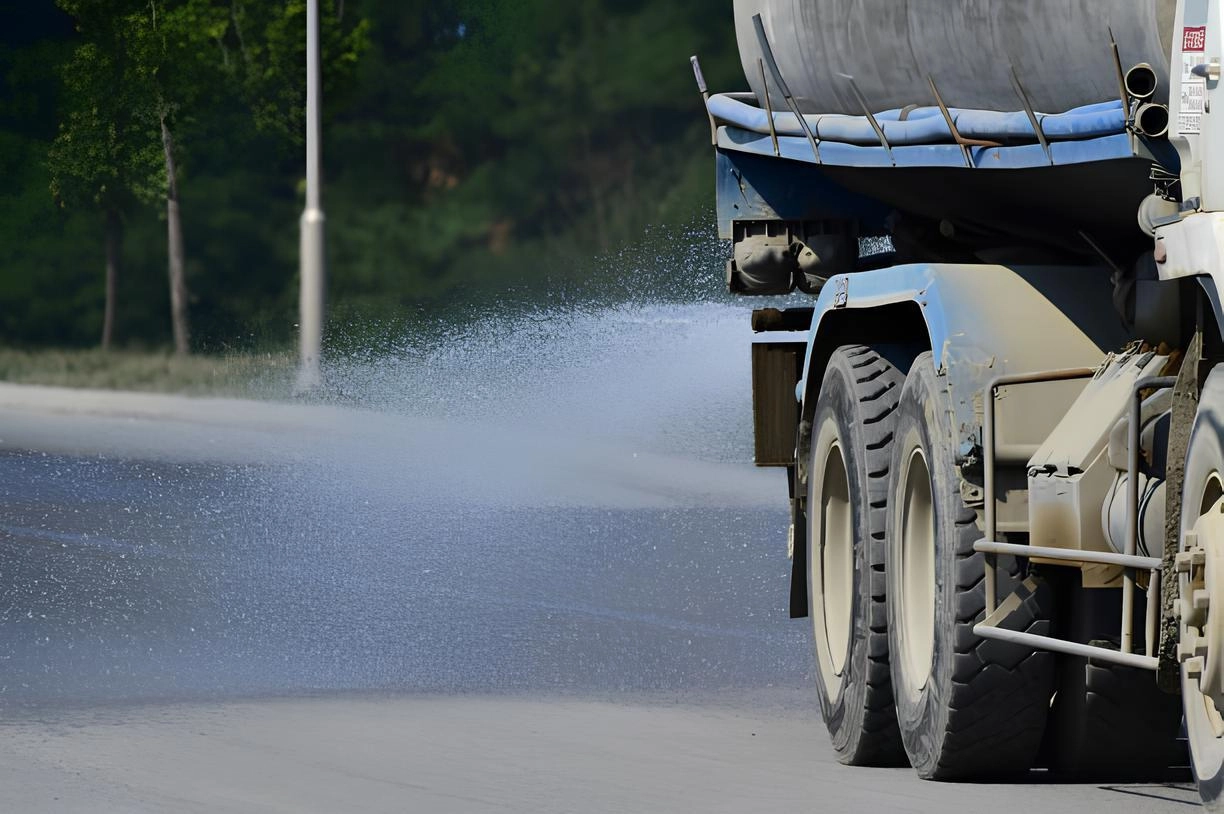
Quick Summary: Water truck dust control is how most North Dakota and Minnesota job sites stay on the right side of fugitive dust rules and OSHA's silica standard. A water truck wets haul roads, pads, and stockpiles so dust never leaves the site, and the right tank size, spray hardware, and chassis keep that job repeatable shift after shift without overloading the truck.
Why Does a Job Site Need Water Truck Dust Control?
Dust is a compliance problem before it's a nuisance problem. Dry gravel roads, freshly graded pads, and loaded haul trucks all kick up fugitive dust, meaning particulate that escapes from a source with no stack or pipe. Regulators in both of Wallwork's home states expect a contractor to prevent it, and OSHA treats wetting down as a primary control for worker exposure to respirable crystalline silica.
A water truck is the most direct tool for all three jobs: it puts water exactly where the traffic is, it can be dispatched on a schedule that follows the weather, and it works on sites too large or too spread out for fixed sprinklers.
Water Truck Dust Control Rules: North Dakota, Minnesota, and OSHA at a Glance
| Rule | What It Requires | Where It Applies |
|---|---|---|
| North Dakota Administrative Code 33.1-15-17 | No person may cause or permit fugitive emissions without reasonable precautions; lists frequent watering, wetting down (including prewatering), dust palliatives, speed control, and keeping mud and dirt off improved roads | Unpaved roads, parking areas, demolition, earth moving, excavation, mining, and haul equipment |
| Minnesota Rule 7011.0150 | Reasonable measures to keep particulate matter from becoming airborne when a road, driveway, or open area is built, used, repaired, or demolished; precautions to prevent visible dust beyond the lot line; applying water is a listed measure | Construction sites, roads, driveways, and open areas |
| OSHA 29 CFR 1926.1153 (Table 1) | Respirators are not required for earthmoving tasks when wet methods suppress dust, or when the operator works from a properly sealed enclosed cab | Grading, excavating, and other tasks involving heavy equipment and utility vehicles |
This is general information, not legal advice. Permit conditions, local ordinances, and project specifications can add requirements, so confirm what applies to your site with the North Dakota Department of Environmental Quality, the Minnesota Pollution Control Agency, or your project's engineer before you set the watering plan.
How Does a Water Truck Dust Control Program Work?
A defensible plan is a repeatable routine, not a one-time soaking. Four steps cover it.
Step 1: Identify Every Dust Source on the Site
Haul roads, staging pads, stockpiles, and loadout areas each dry out at a different rate. North Dakota's rule specifically calls out unpaved roads, earth moving, excavation, and haulage equipment, so map those first and note which ones carry the heaviest traffic.
Step 2: Size the Water Truck to Your Busiest Day
Work backward from the densest watering day: how many acres or road miles need wetting per shift, how heavy an application the project specs call for, and how long a round trip back to the water source takes. A tank that runs dry before the next refill is a dust problem waiting to happen.
Step 3: Match the Spray Hardware to the Surface
Spray bars suit haul roads and broad pads. Hose reels handle spot work like trench faces. Water cannons reach stockpiles and corners. Independent air-control valves let the operator open the front, rear, and side circuits separately, and spare spray heads matter because a single plugged head leaves one wheel path dusty.
Step 4: Apply Light, Reapply on a Schedule
OSHA's guidance is to apply enough water to minimize visible dust without creating a mud slurry, since too much water causes its own hazards. In hot, dry weather, morning and late-afternoon passes often hold better than one midday flood. Re-wet based on traffic and wind, and treat idle periods like weekends and holidays the same way, since North Dakota's rule explicitly applies its dust measures then too.
Choosing a Water Truck: Tank Size, Weight, and Chassis
Water weighs about 8.34 lb per gallon, so tank size and chassis rating are the same decision. A full 2,000-gallon tank carries roughly 16,680 lb of water before the tank, pump, and truck are counted.
| Truck Type | Typical Capacity | Full-Load Water Weight (Approx.) | Where It Fits |
|---|---|---|---|
| Standard on-road rigid truck | 2,000–6,000 gal | 16,680–50,040 lb | Dust control on sites reachable by standard roads |
| Off-road rigid truck | 8,000–40,000 gal | 66,720–333,600 lb | Mining, quarry, and other remote sites |
| Smaller towed trailer | 300–3,000 gal | 2,500–25,020 lb | Urban and suburban sites on well-maintained roads |
Contractor and rental steel tanks most often come in 2,000-gallon and 4,000-gallon sizes, mounted on medium- and heavy-duty chassis. Whatever the size, confirm the finished truck stays inside legal axle limits when it's full and the spray bars are running. Overfilling to save trips wears springs and brakes early.
Three other specs are worth settling up front: internal baffles, which break up surge when a half-full tank brakes; a PTO matched to the transmission, since a mismatched PTO is a common cause of early failure; and a hydraulic-driven centrifugal pump sized to the spray manifold.
Water Truck Dust Control in North Dakota and Minnesota
Short summers and long dry stretches across the Red River Valley and the western ND oilfield mean job sites can go from muddy to dusty in a week. Gravel township roads, aggregate pits, and wide-open grading sites all need water, and a truck that sits idle most of the winter needs a written drain-down checklist for the tank, pump, manifold, spray bars, and hose reels before the first hard freeze.
Parts availability matters here too. Nozzles, filters, fittings, and PTO components wear out during the busiest weeks of a project, and Wallwork's parts and service network across Fargo, Grand Forks, Bismarck, Dickinson, Williston, Fergus Falls, and Minot keeps those repairs close to the job.
Frequently Asked Questions
What is a water truck used for on a construction site?
A water truck suppresses dust on haul roads, pads, and stockpiles, and it also adds light, even moisture ahead of rollers during compaction. Dust control is the most common job, and it is the main way contractors meet fugitive dust rules.
How often should a water truck run on a job site?
It depends on traffic, wind, and temperature, so there is no single interval. In hot, dry weather, morning and late-afternoon passes often hold better than one midday flood, and the schedule should follow how quickly the surface dries out.
Does OSHA require water for dust control on earthmoving equipment?
OSHA's Table 1 does not require respirators for earthmoving tasks when wet methods suppress dust or when the operator works in a properly sealed enclosed cab. If the operator is the only worker on the task, the employer can choose either approach, but when other workers are involved, water or suppressants must be applied as needed to minimize their exposure.
How much water does a 2,000-gallon water truck carry?
At about 8.34 lb per gallon, a full 2,000-gallon tank holds roughly 16,680 lb of water alone, before the tank, plumbing, and truck weight are added. That is why the chassis rating has to be checked against the finished, loaded weight.
Get the Right Chassis Under Your Water Tank
A water truck is only as dependable as the chassis under it. Start with the tank size and watering plan, then match it to the axle ratings and PTO setup your site needs. Wallwork carries Kenworth medium- and heavy-duty trucks, including the T880 vocational truck, and the Ford Super Duty and medium-duty lineup. Browse current inventory, compare rental and lease options through NationaLease if a one-season project doesn't justify owning a truck, talk financing through Wallwork Financial, or contact your nearest Wallwork location to talk through what your water truck dust control plan needs.