


Inside a 50-Foot Truck Paint Booth: How Major Collision Repairs Get Done
July 30, 2026 - 10:22:15 am
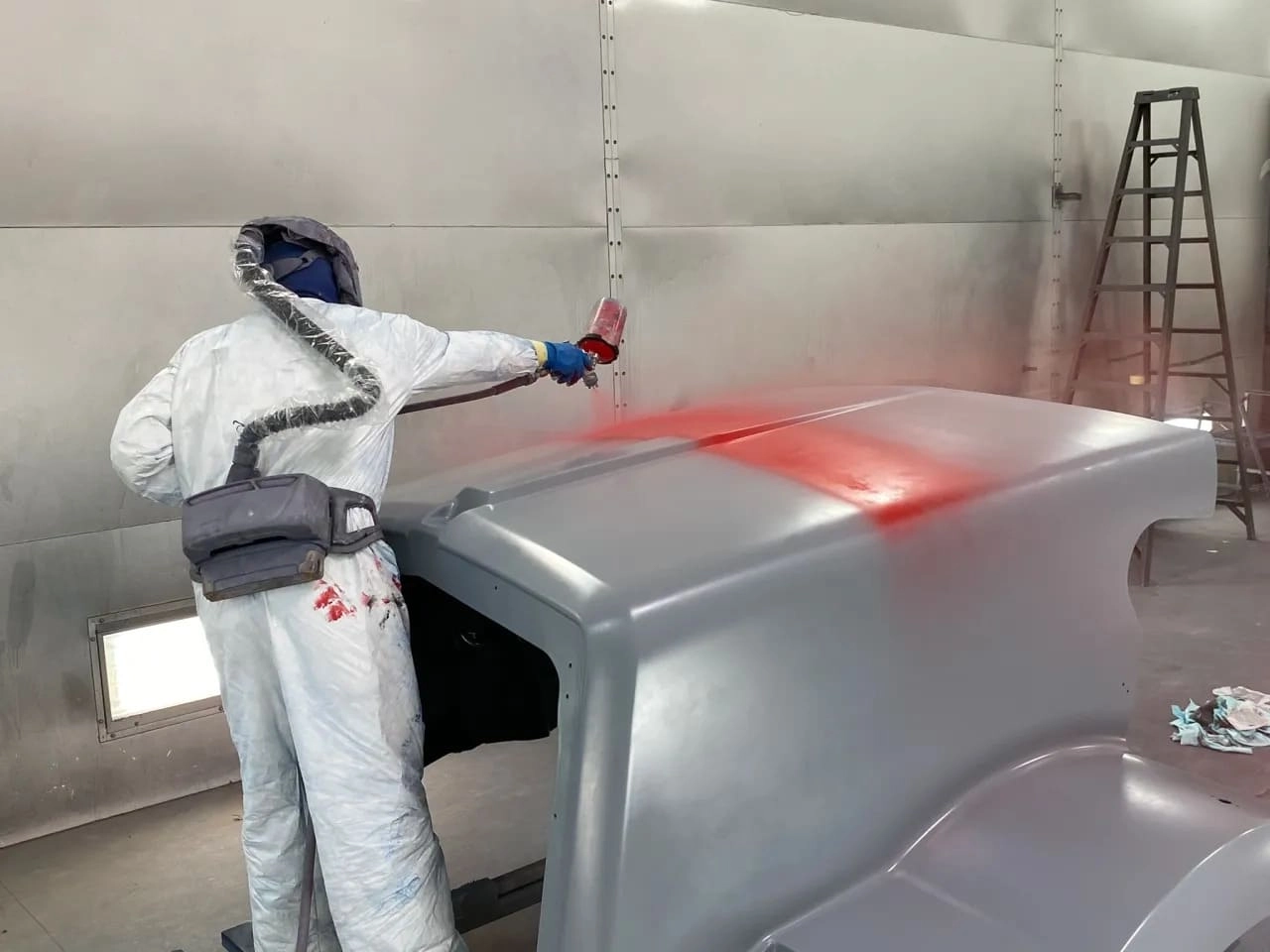
Quick Summary: A semi truck paint booth repair involves structural alignment, surface prep, and a controlled, factory-grade repaint of a Class 8 vehicle. It requires a 50-foot downdraft paint booth because a standard 24-to-28-foot auto body booth can't physically house a full tractor — Wallwork's own Fargo and Bismarck Truck Collision Centers each run a 50' TECOR 5000 down-draft paint booth built specifically for that scale of work.
Getting a heavy-duty rig back on the road after a collision takes more than hammering out a dent and matching a color. A real semi truck paint booth repair demands industrial-scale infrastructure — frame racks built for Class 8 weight, and a booth long enough to paint the whole vehicle in one continuous pass. For fleet managers and owner-operators from Fargo and Grand Forks to Bismarck, Minot, Dickinson, and Williston, downtime is the real cost, which is why booth capability and process discipline matter more than they might seem to at first glance.
Why Commercial Collision Work Demands a 50-Foot Downdraft Booth
A standard auto body booth tops out around 24 to 28 feet — built for sedans and pickups, not a Kenworth W900L that runs roughly 130 inches of bumper-to-back-of-cab before a sleeper or trailer is even factored in. Fit a Class 8 tractor into a car-sized booth and you're painting in sections with visible blend lines, or turning the job away. A 50-foot downdraft paint booth solves that at the source: the entire vehicle goes in and gets painted in one continuous pass, edge to edge, with no seam where one day's work stopped and the next started. Wallwork's own facilities are a real example: both the Fargo and Bismarck Truck Collision Centers run a 50' TECOR 5000 down-draft paint booth, built to handle a full Class 8 tractor rather than a section at a time.
Airflow direction matters as much as length. Downdraft airflow pulls filtered air in through a ceiling bank, straight down across the vehicle, and out through floor-level filters, rather than pulling air horizontally the way an older crossdraft design does. That top-to-bottom path keeps overspray containment working in the booth's favor — contamination gets pulled down and away from the wet panel instead of drifting sideways across it.
| Feature | Standard Auto Body Booth | 50-Foot Heavy-Duty Truck Booth |
|---|---|---|
| Dimensions | 24-28 feet long | 50+ feet long — fits full cabs, sleepers, and trailers |
| Airflow style | Crossdraft (horizontal) | Downdraft (top-to-bottom for cleaner overspray control) |
| Air handling | Standard shop-scale filtration | 10,000-14,000+ CFM makeup air, built for rapid-cycle throughput |
| Heating/curing | Standard low-temp bake | High-temp thermal baking cycle for faster, harder cure |
Step-by-Step: What a Major Collision Repair Actually Involves
Step 1: Computerized Estimating & Structural Alignment
Before any spraying happens, the vehicle goes through a detailed computerized estimate to document hidden damage, followed by computerized frame alignment to pull the chassis back to factory tolerances. Fiberglass hood repair and panel replacement happen at this stage too — paint over an improperly repaired structure just hides a problem instead of fixing it.
Step 2: Surface Preparation & Masking
Repaired areas are sanded, primed, and sealed against moisture before anything gets painted. Masking protects chrome, glass, wiring harnesses, and electrical components from overspray — a step that's easy to rush and expensive to redo.
Step 3: Entering the Booth & OEM Color Matching
Once prepped, the vehicle moves into the downdraft booth, where OEM color matching — using DuPont-certified color systems, since Wallwork's painters are DuPont Certified — ensures a fleet's color scheme blends seamlessly into the existing finish rather than reading as an obvious repaint.
Step 4: Downdraft Spraying & Thermal Curing
Controlled downdraft spraying lays down even basecoat and clearcoat passes, and a high-temperature thermal baking cycle cures the finish to a hardness that can actually withstand North Dakota winters, road salt, and gravel, rather than air-drying slowly at ambient shop temperature.
Protecting North Dakota's Agriculture and Construction Rigs
Regional operators put their equipment through conditions most collision centers never plan for. Grain haulers running the Red River Valley take a constant beating from gravel on rural roads; sugar beet trucks, side dumps, and concrete mixers fight through mud, calcium chloride, and road salt for months at a stretch. In that environment, a quality paint job isn't cosmetic — the multi-layer clearcoat applied during a proper repair acts as genuine corrosion barrier protection, sealing structural steel and aluminum against the rust and chemical exposure that shortens the working life of expensive commercial assets.
Frequently Asked Questions
How long does a semi truck paint booth repair usually take?
It depends on severity. A localized repair — a hood, a bumper, a single cab panel — often takes a few days. A major rollover or jackknife requiring extensive frame alignment and fiberglass repair takes longer, since structural integrity has to be confirmed before any paint goes on.
Can a 50-foot booth accommodate both the truck cab and trailer?
Yes — that's specifically why booths are built to that length. A full tractor-trailer combination, a large vocational body, or heavy equipment can be painted in one pass without breaking the rig apart.
Does Wallwork Truck Center handle insurance claims for major fleet collisions?
Yes. Wallwork's collision teams work directly with insurance adjusters and provide detailed computerized estimates, so the claims process doesn't become the bottleneck it often is at a shop unfamiliar with commercial fleet claims.
Why is downdraft better than crossdraft for heavy trucks?
Downdraft pulls air straight down from ceiling to floor, moving overspray and dust away from the wet panel immediately. Crossdraft pulls air horizontally, risking contaminants dragging across the full length of a truck's side panels — a bigger problem on an 8-foot-tall truck than a sedan.
Trust Wallwork Truck Center for Your Fleet's Collision and Paint Repairs
When your equipment is how you make money, second-rate bodywork isn't an option. Wallwork's DuPont-certified painters repair every major brand — Kenworth, Ford, Volvo, Freightliner, Mack — at either the Fargo Truck Collision Center or Bismarck Truck Collision Center, both running the same 50' TECOR 5000 downdraft booth. Contact our collision team to schedule a computerized estimate and get your rig back on the road.