


Kenworth T880 vs. Peterbilt 567: Which Class 8 Vocational Truck is Right for You?
March 31, 2026 - 8:02:15 am
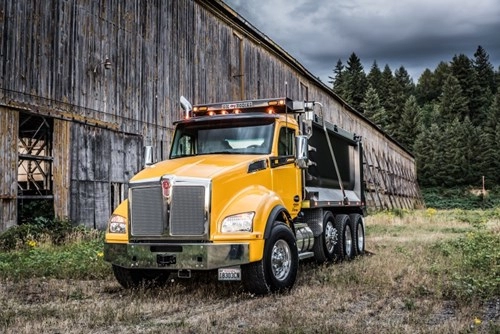
When your business relies on moving earth, pouring concrete, or hauling heavy equipment, choosing the right Class 8 vocational truck is the most critical decision you can make. The battle between the Kenworth T880 vs. Peterbilt 567 is a debate among the industry's heaviest hitters. Both trucks share a legendary heritage of durability, but their engineering philosophies diverge when it comes to cab architecture, suspension technology, and steering geometry.
If you are expanding your fleet, this comprehensive buying guide breaks down the specific specifications, suspension options, and transmission configurations of both models. As a Kenworth-certified dealer, Wallwork Truck Center has the expertise to help you navigate these specs and configure the ultimate vocational workhorse.
The Summary
For fleet managers and operators looking for a quick breakdown, here is the definitive verdict on how the Kenworth T880 vs. Peterbilt 567 match up in three critical vocational categories:
- Winner for Payload: Kenworth T880. While both trucks offer Gross Vehicle Weight Ratings (GVWR) that can exceed 90,000 lbs, depending on the axle configuration, the Kenworth T880 secures the win due to its proprietary AirGlide (AG) suspensions. Configurations like the AG690 tridem suspension manage up to 69,000 lbs on the rear, offering superior payload stability, unparalleled axle articulation, and load equalization on uneven job sites.
- Winner for Cab Visibility: Kenworth T880. The Peterbilt 567 features a massive 1,946-square-inch windshield, but the Kenworth T880 wins in practical visibility. The T880 features a steeply sloped hood for a superior ground strike view and a bonded windshield with a highly efficient wiper system that clears 1,382 square inches (78% wiper efficiency), keeping lines of sight clear in mud, dust, and heavy snow.
- Winner for Turning Radius: Kenworth T880. Maneuvering through tight residential builds or crowded oil fields requires exceptional steering geometry. The Kenworth T880 achieves up to a 46-degree right-hand wheel cut, resulting in a tight 36.4-foot left-hand turning radius. The Peterbilt 567 tops out at a 37-degree right-hand wheel cut and a 38.5-foot turning radius.
- Serviceability/Interior Winner: Peterbilt 567. While the T880 takes the performance edge, the Peterbilt 567’s Metton® hood is lighter and more impact-resistant, and its interior "SmartDash" system is often cited by drivers as having a more intuitive ergonomic layout for long shifts.
Power and Precision: Engine and Transmission Configurations
A vocational truck is only as good as its powertrain. Both the Kenworth T880 and the Peterbilt 567 are available with highly advanced 11-liter, 13-liter, and 15-liter engine options, capable of pushing over 500 horsepower and 1,850 lb-ft of torque. However, the way that power is delivered to the ground depends heavily on the transmission configuration.
Advanced Transmission Configurations
Vocational applications require specialized gearing to handle creeping speeds in mud and highway speeds under heavy load.
- 12-Speed Automated Manual Transmissions (AMT): Designed for weight savings and efficiency, this proprietary 12-speed transmission is ideal for standard dump applications. It features intelligent shifting algorithms that adapt to grade and payload, minimizing driver fatigue and protecting the driveline.
- 18-Speed High-Performance AMTs: For heavy-haul operations, the proprietary 18-speed configuration provides tighter gear steps. This keeps the engine in its optimal power band when pulling maximum payloads up steep inclines. Both the Kenworth T880 and Peterbilt 567 utilize these high-capacity automated options to execute flawless shifts under extreme torque.
- Severe-Duty Automatics: For applications requiring uninterrupted power delivery, such as concrete mixers, hydro-excavators, or refuse trucks, traditional heavy-duty planetary automatic transmissions can be spec'd in both models, providing seamless acceleration without power interruption during shifts in soft terrain.
Mastering the Payload: Kenworth AG Suspension Technologies
When evaluating the Kenworth T880 vs. Peterbilt 567, the suspension system is where the Kenworth T880 truly differentiates itself for severe vocational work. Maximizing payload without destroying the chassis or the driver's back requires advanced engineering.
The Peterbilt 567 offers a solid range of walking beam and air-ride suspensions, but the Kenworth T880 provides access to the proprietary Kenworth AirGlide (AG) suspension lineup. These suspensions are specifically engineered to eliminate wheel hop, reduce driveline angle variations, and smooth out the most punishing terrain.
Key Kenworth Suspension Options for the T880
- Kenworth AG460: This is an industry-leading 46,000-lb rated tandem air suspension. It features a robust design that provides 10.5 inches of ride height. It excels in heavy dump and logging applications where extreme articulation and roll stability are paramount to keeping the truck upright and moving.
- Kenworth AG690: When you are pushing the absolute limits of heavy haul, the AG690 tridem suspension is the definitive answer. Rated for a staggering 69,000 lbs, this heavy-duty air-ride system distributes extreme payloads across three axles perfectly, protecting the high-strength steel frame and maximizing legal weight distribution.
- Kenworth AG130: On the front end, the T880 can be equipped with the AG130 front air suspension (rated up to 13,200 lbs). This innovative design drastically reduces the total cost of maintenance while providing an incredibly smooth ride for the driver, which is a stark contrast to the stiff ride of traditional taper-leaf front springs.
Maneuverability and Control: Turning Radius Breakdown
Navigating a fully loaded Class 8 truck through a crowded construction site requires extreme precision. The geometry of the steer axle and the design of the steering gear dictate how easily a truck can maneuver without reversing.
Kenworth T880 Steering Geometry
The T880 was designed from the ground up to conquer tight spaces. By utilizing an advanced steering gear placement and a set-back front axle configuration, the T880 achieves up to a 46-degree wheel cut. This translates to a highly nimble 36.4-foot turning radius. For operators backing into tight aggregate hoppers or navigating narrow forestry roads, this maneuverability reduces backing events, lowers the risk of accidents, and increases daily cycle times.
Peterbilt 567 Steering Geometry
The Peterbilt 567 is highly capable but features a slightly different steering architecture. The 567 maxes out at a 37-degree wheel cut (depending on the exact tire and wheel specification), resulting in a 38.5-foot turning radius. While perfectly adequate for most heavy civil and highway applications, it requires slightly more room to pivot than the Kenworth.
The Operator's Environment: Cab Visibility and Ergonomics
Driver retention in the vocational sector is closely tied to cab comfort, noise reduction, and visibility. Both models feature wide, 2.1-meter stamped aluminum cabs that resist corrosion, but their interior layouts and exterior designs differ.
- Peterbilt 567: The 567 utilizes a durable, three-piece Metton hood that is highly resistant to impacts and easily repairable. The cab features an ergonomic layout with a customizable digital display. The massive 1,946-square-inch bonded windshield provides excellent forward visibility, though the hood profile sits slightly higher in the driver's field of view.
- Kenworth T880: The T880 features a sharply sloped hood that gives the driver an unmatched panoramic view of the ground immediately in front of the bumper. The T880's windshield design utilizes a highly efficient wiper sweep, clearing 78% of the glass for uninterrupted operation in poor weather. Furthermore, the heavy-duty cab features triple-sealed doors, significantly reducing noise pollution and keeping the cab pristine in dusty environments.
Conclusion
Choosing between the Kenworth T880 vs. Peterbilt 567 ultimately comes down to the precise demands of your job site. While the Peterbilt 567 is a highly respected and rugged machine, the Kenworth T880 offers distinct competitive advantages in extreme payload management via its proprietary AirGlide suspensions, superior ground-strike visibility, and an exceptionally tight turning radius.
Ready to spec a truck that matches your exact vocational needs? As a premier Kenworth-certified dealer, Wallwork Truck Center has the inventory, the state-of-the-art service bays, and the technical knowledge to build your perfect Kenworth T880.