


IFTA Basics for Owner-Operators: What You Need to Know
October 1, 2026 - 9:32:10 am
Quick Summary: IFTA basics for owner-operators come down to three things: knowing if your truck is a qualified motor vehicle, tracking your miles and fuel purchases by state, and filing a quarterly report with your base jurisdiction by the deadline. Miss any of the three and you're looking at penalties, interest, or a revoked license — all avoidable with a little bit of consistent recordkeeping.
What Is IFTA and Who Needs an IFTA License?
The International Fuel Tax Agreement (IFTA) isn't an extra tax — it's a system that redistributes the fuel tax you already pay at the pump to the states where you actually drove. Instead of filing separate fuel tax paperwork in every state you cross, IFTA lets you file one quarterly report with your base jurisdiction (the state where your truck is registered and you keep your operational records), which then settles up with the other states on your behalf.
You need an IFTA license if you operate a qualified motor vehicle in two or more IFTA member jurisdictions. A truck qualifies if it meets any one of these:
- Gross vehicle weight rating (GVWR) or actual gross vehicle weight over 26,001 lbs
- Three or more axles, regardless of weight
- Used in combination (truck plus trailer) with a total weight over 26,000 lbs
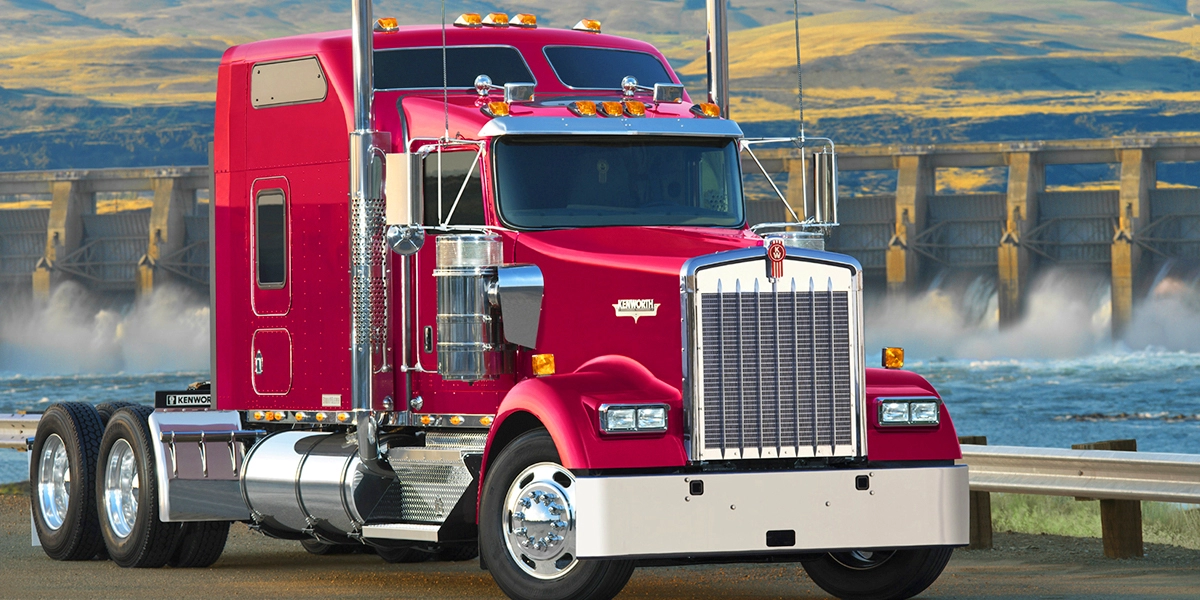
In practice, that means almost every Class 8 truck on the road — a Kenworth T680, T880, or W900L hauling freight, grain, or aggregate across state lines — needs an IFTA license. If you stay entirely within North Dakota or entirely within Minnesota and never cross a state line, IFTA doesn't apply to you; the moment you do, it does.
Filing Your Quarterly IFTA Report
Once you're licensed, filing comes down to three repeatable steps every quarter.
Step 1: Track Every Mile and Every Gallon
Log total miles driven in each state and keep every fuel receipt — date, seller, gallons, price, and unit number — for every purchase. Odometer readings at the start and end of each trip, and at state lines, make reconstructing a quarter's driving far easier than trying to remember it later.
Step 2: Calculate Your Taxable Gallons
Your fleet's average miles per gallon drives the whole calculation. For each state you drove in: taxable gallons = state miles ÷ fleet MPG. Subtract the gallons you already bought (and paid tax on) in that state to get your net taxable gallons, then multiply by that state's IFTA tax rate. A positive number means tax owed to that state; a negative number means a credit.
Step 3: File and Pay by the Deadline
IFTA runs on the same quarterly calendar in every member jurisdiction: Q1 is due April 30, Q2 is due July 31, Q3 is due October 31, and Q4 is due January 31. File through your base jurisdiction even in a quarter with zero miles — a report is still required.
North Dakota and Minnesota IFTA at a Glance
| North Dakota | Minnesota | |
|---|---|---|
| Base Jurisdiction Role | Handles licensing, decals, and quarterly filing for ND-based carriers | Handles licensing, decals, and quarterly filing for MN-based carriers |
| License/Decal Fees | $3 license renewal; $4 combined decal/license | Set by the MN Department of Public Safety; confirm current-year fee with DPS before renewing |
| Renewal Deadline | Before your current IFTA license year expires; a two-month grace period applies to displaying new credentials, not to renewing late | Set annually by MN DPS; check your renewal notice for the exact date |
North Dakota also requires three proofs of residency showing the same North Dakota street address (a P.O. Box doesn't count) when you apply — driver's license, utility bill, tax return, or similar documentation all work.
Frequently Asked Questions
How often do I have to file an IFTA report?
Every quarter, on a fixed calendar that's the same across every member state: April 30, July 31, October 31, and January 31. You file even if you didn't drive any qualifying miles that quarter.
What happens if I file my IFTA report late?
Late filings carry a penalty of $50 or 10% of the net tax due, whichever is greater, plus monthly interest on any unpaid balance. Miss two consecutive quarters and your base jurisdiction can revoke your IFTA license entirely.
Do I need an IFTA license if I only drive within North Dakota?
No. IFTA only applies once a qualified motor vehicle crosses into a second IFTA member jurisdiction. Purely intrastate operation doesn't trigger the requirement, though you'd still need one the moment a load takes you across the border.
How long do I need to keep my IFTA mileage and fuel records?
Four years from the filing date. That covers mileage logs, fuel receipts, and any supporting trip documentation your base jurisdiction could request in an audit.
Keep More of Your Fuel Tax Dollars on the Road
Your fleet's real-world MPG is the single biggest lever in the IFTA formula — a well-maintained truck simply owes less net tax per mile than one running rich or dragging a clogged filter across state lines. Wallwork's parts and service network keeps your engine, drivetrain, and emissions systems tuned to the fuel economy your truck was built to deliver, which shows up directly in your next quarterly filing.
If ownership overhead — including IFTA administration — is what's holding you back from expanding into a new lane or region, it's worth comparing the numbers against a rental or lease through NationaLease before you buy outright. And when it is time to add or replace a truck, browse Wallwork's current inventory or talk financing options through Wallwork Financial — reach out any time through our contact page.