


A History of Kenworth Trucks Through the Years
December 26, 2025 - 8:53:42 am
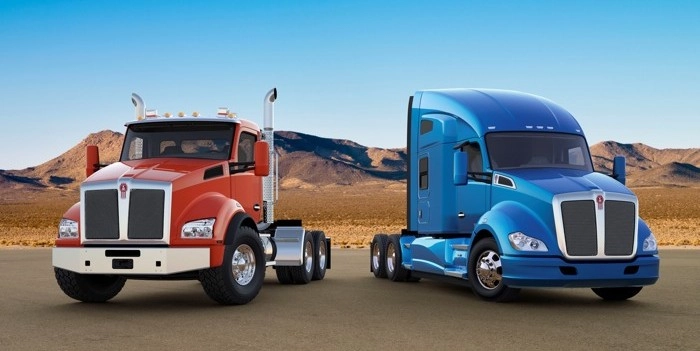
For over a century, the name Kenworth has been synonymous with quality, innovation, and the spirit of the open road. From the muddy logging trails of the Pacific Northwest in the 1920s to the high-tech, aerodynamic highways of today, Kenworth has not just built trucks; they have defined the trucking industry.
At Wallwork Truck Center, we are proud to be part of this legacy. As a dealer that has supported the trucking community for decades, we understand that when you drive a Kenworth, you are driving a piece of history engineered for the future.
This article takes a journey through time, exploring the evolution of Kenworth trucks through the years. It charts the milestones that turned a small Seattle manufacturer into the "World's Best."
1923-1930: The Foundation of a Legend
The story begins in Seattle, Washington. In 1923, Harry Kent and Edgar Worthington incorporated the Kenworth Motor Truck Company. The name itself was a combination of their surnames: "Ken" from Kent and "Worth" from Worthington.
- 1923: The first Kenworth truck rolls off the line. Unlike the mass-produced vehicles of the time, these early models were custom-built to conquer the rugged, muddy logging roads of the Pacific Northwest. This commitment to custom engineering—building the right truck for the specific job—remains a core Kenworth philosophy today.
- 1924: In its first full year, the company sold 80 trucks.
- 1927: Production increases to three trucks per week. Kenworth expands its reach, opening an assembly plant in Canada to serve a broader market.
1930s: Innovation Born from Necessity
The Great Depression tested every American business, but Kenworth survived by adapting and innovating.
- 1933: A landmark year for the industry. Kenworth becomes the first American truck manufacturer to install diesel engines as standard equipment. This shift to diesel power revolutionized heavy-haul efficiency.
- 1933: Kenworth introduces the first factory-installed sleeper cab. This innovation acknowledged the changing nature of logistics, allowing drivers to travel further and rest comfortably, laying the groundwork for the long-haul culture we know today.
- 1936: The "Bubble Nose" cab-over-engine (COE) model is introduced. This design was a direct response to strict length regulations, maximizing cargo space within legal limits.
1940s: The War Effort and Heavy Duty Expansion
During World War II, Kenworth shifted its focus to support the Allied forces, proving the durability of their engineering in the harshest conditions imaginable.
- 1941-1945: Kenworth produces the M-1 Wrecker, a 6x6 heavy-duty recovery vehicle used to retrieve tanks and disabled vehicles in war zones. The company also manufactured components for the B-17 Flying Fortress and B-29 Superfortress bombers.
- 1948: The "Bullnose" 500 Series is launched. This post-war COE became an icon of the era, known for its distinctive styling and robust performance.
1950s: Conquering the Off-Road
As the global economy expanded, so did the need for resources. Kenworth responded by building beasts that could operate where roads didn't exist.
- 1955: The launch of the 963 series. These massive trucks were designed for the oil deserts of the Middle East and the remote oilfields of North Dakota and Texas. Their legacy lives on in the modern C500.
- 1956: The 900 Series conventional is introduced, featuring a drop-frame front end to accommodate larger radiators and more powerful engines.
1960s: The Birth of Icons (W900 & K100)
The 1960s gave birth to the two most recognizable silhouettes in trucking history.
- 1961: Kenworth introduces the W900 (the "W" stands for Worthington). With its long hood and commanding presence, it set the standard for what a conventional truck should look like.
- 1961: The K100 (the "K" stands for Kent) is released. This cab-over model became the king of the highway during the era of length restrictions, famous for its flat face and high-visibility cab.
- 1967: The "W900A" model brings a wider hood to house bigger diesel engines, cementing the truck's status as the owner-operator's dream.
1970s: The Aerodyne Era
As the interstate highway system connected the country, driver comfort became a priority.
- 1976: Kenworth unveils the Aerodyne sleeper. This was the first factory-raised roof sleeper cab, offering dual bunks and headroom that allowed a driver to stand up inside the truck. It changed life on the road forever.
- 1972: Kenworth produces its 100,000th truck.
1980s: The Aerodynamic Revolution (T600 & T800)
The 1980s brought high fuel prices, and Kenworth responded with radical engineering that changed the shape of trucking.
- 1985: The release of the Kenworth T600. Nicknamed the "Anteater" for its sloped hood, this was the industry's first truly aerodynamic Class 8 truck. It reduced aerodynamic drag by 40% compared to a conventional truck, saving thousands in fuel costs and setting the template for every modern highway tractor.
- 1986: The Kenworth T800 is introduced. Known as the "Ultimate Workhorse," the T800 combined the comfort of a highway truck with the brute strength needed for construction, heavy haul, and logging. It remains a legend in North Dakota's vocational sector.
1990s - 2000s: Refining the Ride
- 1990: The W900L (Long Hood) is introduced, featuring a 130-inch bumper-to-back-of-cab (BBC) length. It became the ultimate status symbol for independent truckers.
- 1996: The T2000 is launched, pushing aerodynamic boundaries even further with a wide-body cab design.
- 2006: The T660 replaces the T600, offering refined styling and improved airflow, further solidifying Kenworth's leadership in fuel economy.
2010s - Present: The Digital and Efficient Frontier
The modern era of Kenworth trucks through the years is defined by the integration of advanced technology, maximize uptime, and driver luxury.
- 2012: The Kenworth T680 debuts. Built from a clean sheet of paper, it utilized the most advanced aerodynamics, a quiet cab, and integrated PACCAR powertrain technology to become the most fuel-efficient truck in Kenworth history.
- 2013: The Kenworth T880 is released to succeed the legendary T800. It brought the wider, quieter cab of the T680 to the vocational market, quickly becoming the new standard for dump trucks, mixers, and heavy haulers.
- 2018: The W990 is launched, offering a bold new look that honors the W900's legacy while providing the modern comfort and width of the 2.1-meter cab platform.
- 2021: The T680 Next Gen arrives, featuring digital mirrors, a 15-inch digital display dashboard, and even sleeker aerodynamics.
- 2023: Kenworth celebrates its 100th Anniversary. A century of excellence is marked with special edition trucks and a renewed commitment to the next 100 years of transportation.
Be Part of History at Wallwork Truck Center
From the first logging trucks of 1923 to the T680 Next Gen of today, Kenworth has never stopped moving forward. Owning a Kenworth isn't just about getting the job done; it's about owning a machine built on a century of "World's Best" engineering.
Whether you are looking for the classic style of a W900L, the vocational power of a T880, or the efficiency of a T680, Wallwork Truck Center is your connection to this legendary lineage.
Ready to write the next chapter of your fleet's history?
Visit Wallwork Truck Center today to explore our inventory of new and used Kenworth trucks.