


What Your Kenworth Dash Warning Lights Meaning Is: A Complete Guide
December 09, 2025 - 8:52:01 am
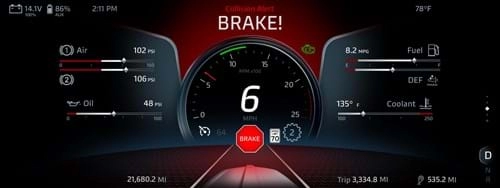
Modern Kenworth trucks, like the T680, T880, and W990, are engineering marvels. They are equipped with sophisticated computers that constantly monitor the health of your engine, transmission, and safety systems. When something isn't right, your truck "talks" to you through the dashboard.
However, seeing a new symbol light up on your dash can be stressful. Is it a "pull over right now" emergency, or a "fix it when you get home" annoyance?
At Wallwork Truck Center, we want you to feel confident behind the wheel. This complete guide breaks down the meaning of your Kenworth dash warning lights, decoding the colors and symbols so you know exactly what action to take.
The Rule of Colors: Assessing Urgency
Before we dive into specific symbols, you need to understand the universal color code Kenworth uses. The color of the light tells you the urgency of the situation.
- RED (Stop Now): A red light indicates a critical system failure. You must pull over safely and shut down the engine immediately to prevent catastrophic damage or an accident.
- YELLOW / AMBER (Check Soon): An amber light indicates a fault that requires attention. You can usually continue to drive to a safe location or a service center, but you should not ignore it for long.
- GREEN / BLUE (System Active): These are informational lights. They tell you a system is working (like high beams or cruise control) or a normal process is happening (like a high-temperature exhaust during regen).
Critical Red Warning Lights (Stop Immediately)
If you see these lights, your priority is safety. Pull over as soon as it is safe to do so.
1. Stop Engine Light
- The Symbol: A red engine block, often with the word "STOP" inside it.
- What It Means: This is the most serious warning on your dash. It indicates a major engine failure is imminent, such as total loss of oil pressure or extreme overheating. In many modern Kenworths, the computer may automatically de-rate the engine or shut it down to protect itself.
- Action Required: Pull over immediately. Do not try to "limp" to a shop. Turn off the engine and contact Wallwork Truck Center for roadside assistance or towing.
2. Low Oil Pressure
- The Symbol: A red oil can or a gauge reading in the red zone.
- What It Means: Your engine is not getting enough lubrication. Without oil pressure, metal components will grind against each other, seizing the engine in minutes.
- Action Required: Stop immediately and check your oil level. If the level is full but the light stays on, you may have a failed oil pump or sensor. Do not restart the engine.
3. High Coolant Temperature
- The Symbol: A red thermometer floating in liquid.
- What It Means: The engine is overheating. This could be due to a coolant leak, a broken belt, or a stuck thermostat.
- Action Required: Pull over. Do not open the radiator cap while the engine is hot. Check for visible leaks or a broken fan belt once the engine cools.
4. Brake Air Pressure
- The Symbol: A red circle with an exclamation point, or the text "AIR."
- What It Means: The air pressure in your brake system has dropped below safe operating levels (usually below 60 psi). You are at risk of the spring brakes applying automatically while driving.
- Action Required: Stop immediately. Do not move the truck until the system can build and hold air pressure.
Amber Warning Lights (Action Required)
These lights signal that your truck needs attention. While you may not need to stop on the side of the highway, you should plan to visit a service center soon.
1. Check Engine Light
- The Symbol: An amber engine block profile.
- What It Means: The truck’s ECU has detected a fault code. This could be anything from a sensor issue to an electrical problem. The truck will usually run, but performance and fuel economy may suffer.
- Action Required: You can finish your route, but schedule a diagnostic appointment at Wallwork Truck Center as soon as possible to prevent the issue from escalating.
2. Malfunction Indicator Lamp (MIL)
- The Symbol: An amber engine block with the word "CHECK" or an electrical bolt.
- What It Means: This is specifically related to your Emissions Control System. It means the On-Board Diagnostics (OBD) system detects a malfunction that affects your truck's emissions compliance.
- Action Required: Get the vehicle serviced at the next convenient opportunity. Ignoring this can eventually lead to engine de-rating.
3. DPF Status (Diesel Particulate Filter)
- The Symbol: An amber box with exhaust puffing through dots (representing the filter).
- What It Means:
- Solid Amber: The DPF is filling up with soot and needs to regenerate (burn off the soot).
- Flashing Amber: The filter is critically full. You need to perform a parked regeneration immediately.
- Action Required: If solid, try to drive at highway speeds to initiate a passive regen. If flashing, pull over safely and initiate a "Parked Regen" using your dash switch.
4. High Exhaust System Temperature (HEST)
- The Symbol: An amber thermometer above a wavy exhaust pipe.
- What It Means: This is actually a normal operational light. It means your truck is actively regenerating, and the exhaust gases are extremely hot.
- Action Required: Keep driving. However, be careful if you pull over—do not park on dry grass or near flammable materials, as the heat from the exhaust pipe could start a fire.
5. Water in Fuel
- The Symbol: An amber fuel pump with water droplets near the bottom.
- What It Means: The fuel/water separator filter has collected a significant amount of water.
- Action Required: Drain the water from the fuel filter separator at your next stop. If the light persists, you may need a new filter.
6. ABS Warning
- The Symbol: An amber circle with the letters "ABS."
- What It Means: There is a fault in the Anti-Lock Braking System. Your normal brakes will still work, but the anti-lock feature (which prevents skidding) is disabled.
- Action Required: Drive with extra caution, especially on wet or icy roads, and get the system serviced.
Keep Your Dashboard Clear with Wallwork Truck Center
Understanding these lights is the first step; fixing the underlying issue is the second. Modern Kenworth trucks are complex, and a single warning light can be triggered by dozens of different fault codes.
At Wallwork Truck Center, we have the specialized Kenworth diagnostic software to plug directly into your truck, read the specific codes, and pinpoint the exact problem. We don't just guess; we fix it right the first time.