


Matching PTO and Hydraulic Options to Ag Implements
November 17, 2026 - 9:36:12 am
Quick Summary: To match PTO and hydraulic options to ag implements, start with what the implement needs: its flow in gallons per minute, its pressure in psi, and how long it runs at a stretch. Then choose a PTO that fits your transmission and duty cycle, and size the pump to deliver that flow at the PTO's speed. Getting this wrong at order time is expensive to fix at harvest.
It is mid-November, and the order sheet for next season's upfits is open. The new spreader body is on its way, the hydraulics are specified, and nobody has checked whether the pump delivers the flow the implement needs, or whether the PTO is the right type for how long the truck will run it. Get it wrong now, and the truck sits parked in April while the work waits. This guide shows how to match PTO and hydraulic options to the implements your operation runs, before the truck is built or the upfit is ordered.
What PTO Options Are Available for Ag Trucks?
A power take-off (PTO) pulls power from the engine or transmission to run equipment other than the wheels. On an ag truck, that equipment is usually a hydraulic pump that runs a hoist, conveyor, spinner, auger, crane, or grapple. The PTO type decides how much power you can take, where it mounts, and how it engages. The table below compares the main types, based on published manufacturer guidance.
| PTO Type | How It Is Driven | Best For | Watch For |
|---|---|---|---|
| Side-mount (bottom-mount) | Meshes directly with a transmission gear | Most common choice on work trucks; hoists, spreaders, pumps | Needs a transmission with a matching opening (SAE 6-bolt or 8-bolt) |
| Rear-mount (countershaft) | Driven by the transmission countershaft | Higher torque limits; easier installation on some transmissions | Availability depends on the transmission model |
| Split shaft | Takes input from the main driveshaft | Applications needing more horsepower and torque than a transmission PTO, or no transmission opening | Heavier and more involved installation |
| Front-engine (FEPTO) | Crankshaft power through a driveline to the front | Snow and ice, refuse | Driveshaft turns whenever the engine runs, so it needs a dry valve or variable displacement pump |
| Engine flywheel (sandwich) | Mounts between engine and transmission | Largest PTO available; full engine torque | Must be planned before the truck is built |
For most ag trucks, a side-mount PTO driving a hydraulic pump covers hoists, spreaders, and conveyors. Split shaft and flywheel options come into play when an implement needs more power than a transmission-mounted PTO can deliver.
What Is the Difference Between Hot Shift and Cold Shift PTOs?
The shift type decides how the PTO engages, and it has to match your transmission.
A mechanical (cold shift) PTO engages by sliding a gear into mesh, using a lever, cable, or air pressure. It is found on manual transmissions. A PTO is a non-synchronized gearbox, so the transmission gears must stop turning before you engage it. Engaging while they turn can damage the PTO and the transmission.
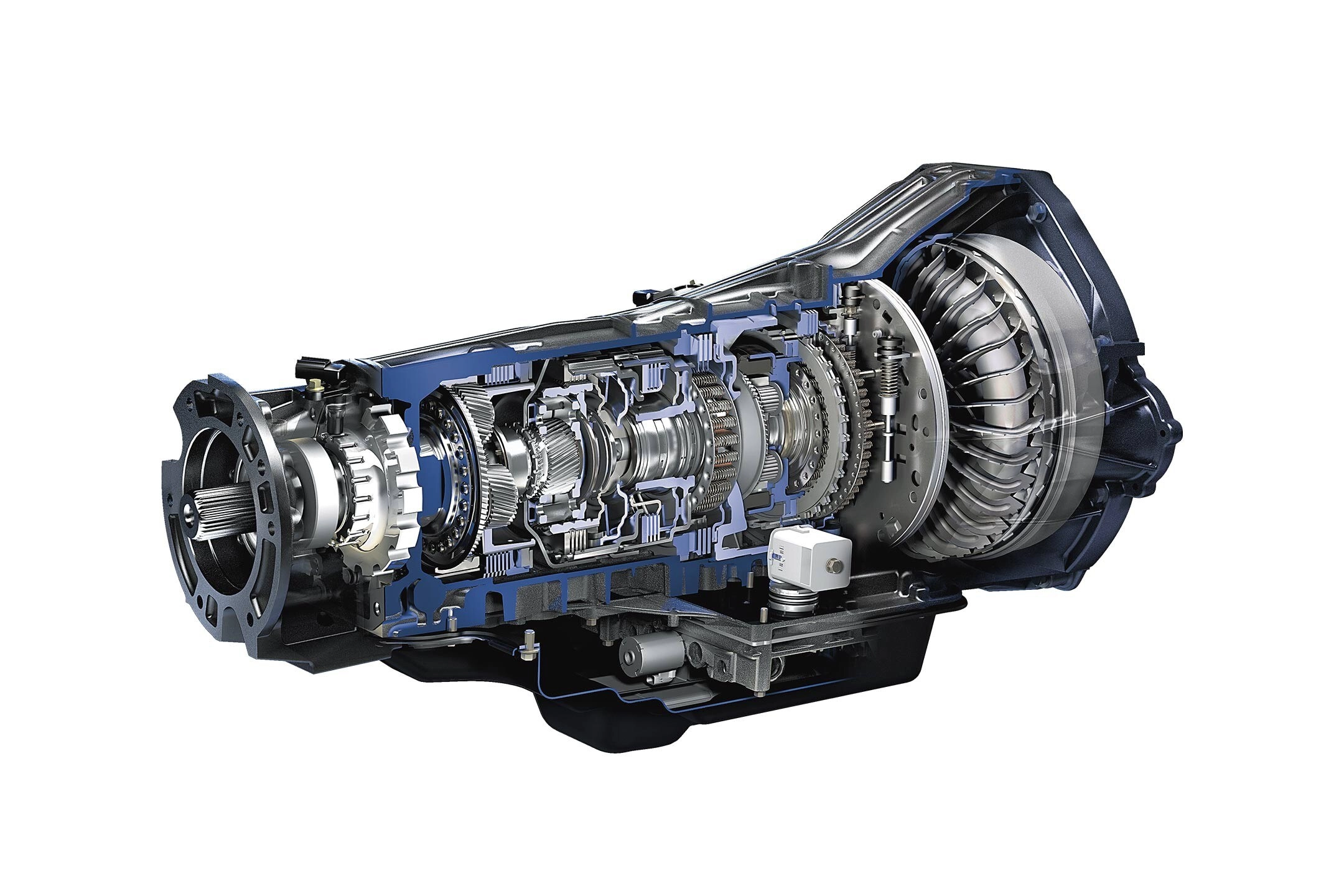
A clutch-shift (hot shift) PTO uses friction discs pressed together by hydraulic or air pressure. It is the most common type on automatic transmissions and can engage with the truck in motion as long as engine speed stays under 1,000 RPM. A constant-drive PTO cannot be disengaged. It suits continuous duty and works best paired with a variable displacement pump to control flow.
What Hydraulic Options Match Which Ag Implement?
The right hydraulic setup depends on how each implement uses flow and pressure. Always confirm the exact flow and pressure requirement with the implement maker. The table below shows the typical duty profile.
| Implement | Typical Duty Cycle | What to Confirm |
|---|---|---|
| Grain or dump body hoist | Intermittent; short lifts a few times a day | Hoist pump flow and pressure for the body size and load |
| Spreader conveyor and spinner | Continuous while spreading | Flow for both conveyor and spinner, and PTO rating for continuous duty |
| Crane, grapple, or bale handler | Intermittent; high pressure, lower flow | Piston pump sizing and pressure rating |
| Sprayer or applicator pump | Continuous while applying | Pump input horsepower and PTO speed ratio |
Gear pumps cover most ag work. For reference, one manufacturer's gear pumps range from about 1 to 21 GPM at 1,000 RPM, and piston pumps suit higher pressure at lower flow, as on cranes and grapples.
How Do You Match PTO and Hydraulic Options to an Ag Implement? A Step-by-Step Guide
Step 1: Get the Implement's Flow and Pressure Requirement
Ask the implement maker for the required flow in GPM and pressure in psi, and for the input horsepower or torque if the implement is driven mechanically. Everything else follows from these numbers.
Step 2: Define the Duty Cycle
Intermittent duty means running less than five minutes at a time, a few times a day, like a hoist. Continuous duty means running more than five minutes out of every 15, like a spreader conveyor. Continuous duty reduces a PTO's torque and horsepower ratings, and miscalculating it shortens PTO life.
Step 3: Identify the Transmission
Note the transmission make and model, including any prefixes or suffixes. The transmission tag, the build sheet on a new truck, or the VIN through your dealer will tell you. The transmission decides which PTOs fit, where they mount, and how they engage.
Step 4: Choose the PTO Type and Engagement Method
Match the PTO type to your power needs and the shift type to your transmission. Choose the mounting location on the transmission and the connection type: a driveshaft for remote pumps, or a direct-mount pump flange. Confirm the direction of rotation the pump needs.
Step 5: Size the Pump
Pump input horsepower is flow times pressure divided by 1,714, divided by pump efficiency. As an illustration, a pump delivering 20 GPM at 2,000 psi at 90% efficiency needs about 26 horsepower. Torque is horsepower times 5,252 divided by RPM, so that pump would need roughly 136 lb-ft at 1,000 RPM of PTO output. Check that result against the PTO's torque rating for your duty cycle.
Step 6: Confirm the Speed Ratio
PTO speed is a percentage of engine speed. A pump that needs 1,000 RPM at an engine speed of 1,500 RPM calls for a ratio of about 67%. Decide the engine speed you will run during PTO work, then pick the ratio that puts the pump at the right RPM.
What Should North Dakota and Minnesota Ag Operators Consider?
Ag work here is seasonal and unforgiving. Planting, spraying, and harvest compress a year of hauling and spreading into a few weeks, and a truck that cannot run its implement during that window costs real money. Spec the PTO and hydraulics at order time, not after the body is mounted, and keep the build sheet and implement specs together for the shop.
Direct-coupled hydraulic pumps need periodic attention: remove the pump every 90 to 180 days, depending on use, and re-grease the spline coupling. Check oil seals and shifting linkage too. For service and parts close to the field, Wallwork supports ag operations through truck repair and parts across North Dakota.
Frequently Asked Questions
What is the difference between a hot shift and a cold shift PTO?
A cold shift (mechanical) PTO engages by sliding a gear into mesh and requires the transmission gears to be stopped, which is typical on manual transmissions. A hot shift (clutch-shift) PTO uses a wet clutch, is common on automatics, and can engage with the truck moving as long as engine speed stays under 1,000 RPM.
How do you size a hydraulic pump for a PTO?
Start with the implement's flow in GPM and pressure in psi. Pump input horsepower equals flow times pressure divided by 1,714, divided by pump efficiency. Then check torque and speed ratio against the PTO's rating for your duty cycle.
What is a split shaft PTO?
A split shaft PTO takes its input from the main driveshaft instead of the transmission. It is used when an application needs more horsepower and torque than a transmission-mounted PTO can handle, or when the transmission has no PTO opening.
Can you add a PTO to an existing truck?
Often yes, but it depends on the transmission. You need the transmission make and model to find a PTO that fits its opening. If the transmission has no opening, a split shaft PTO may be an option.
Spec the Right Truck for Your Implements
Matching PTO and hydraulic options to your ag implements is easiest before the truck is ordered. Browse new Kenworth models, compare the Kenworth T800 specifications, or see current used trucks for sale. When you have the implement specs in hand, contact your nearest Wallwork location to talk through the build.