


Kenworth T380 vs. Freightliner M2 106: Class 6 Delivery Solutions
May 05, 2026 - 8:27:16 am
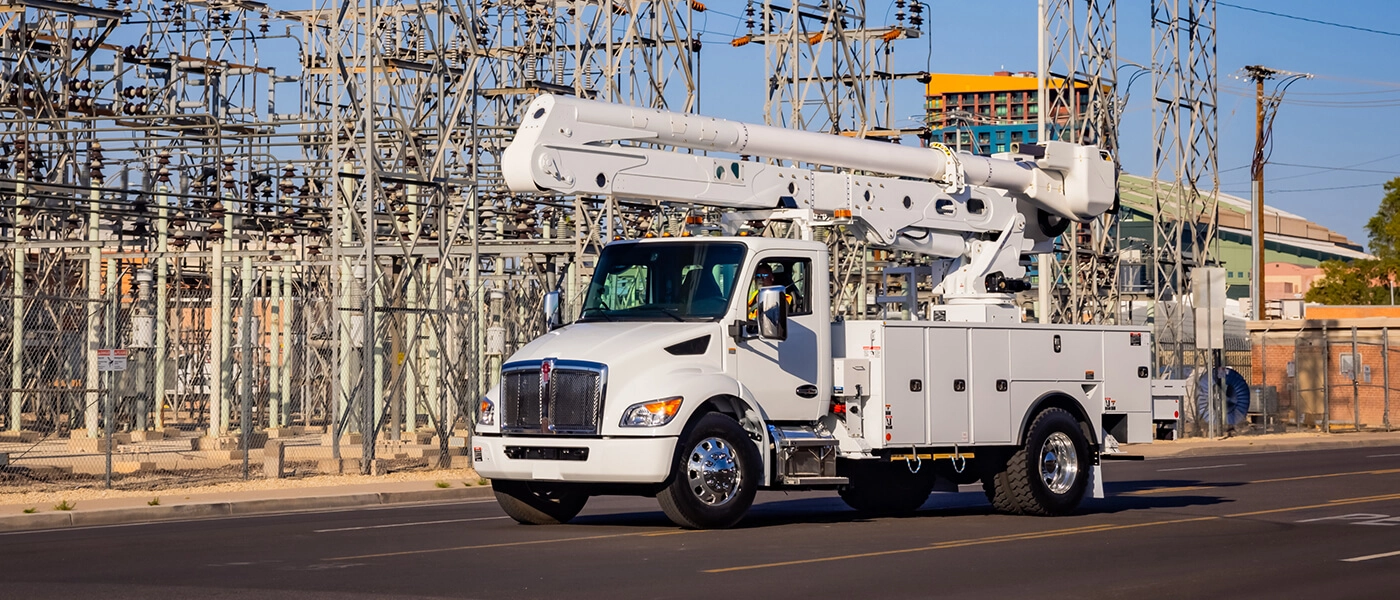
In the fast-paced world of urban logistics and final-mile delivery, the Class 6 truck is the backbone of the supply chain. These medium-duty workhorses must navigate congested city streets, fit into tight loading docks, and provide a reliable platform for heavy cargo box upfits. When fleet managers evaluate the market, the decision often comes down to the two most dominant players in the segment: the Kenworth T380 vs. the Freightliner M2 106.
Both trucks are engineered to maximize uptime and efficiency in pickup and delivery (P&D) operations. However, their approaches to driver ergonomics, cab architecture, and upfitter integration present distinct advantages depending on your specific route demands.
As a certified Kenworth dealership, Wallwork Truck Center has compiled this technical spec guide to help you compare the critical dimensions, maneuverability, and upfit capabilities of these two Class 6 delivery solutions.
Technical Spec Comparison
To build a highly efficient delivery fleet, operational decisions must be grounded in precise chassis specifications. Here is a high-level technical breakdown comparing the Kenworth T380 and the Freightliner M2 106:
- Cab Architecture: Kenworth T380 utilizes an advanced, stamped aluminum 2.1-meter-wide cab for superior driver space and corrosion resistance. The Freightliner M2 106 also utilizes an aluminum cab with a traditional, narrower vocational footprint.
- Target Applications: Both chassis are the industry standards for 24-foot to 26-foot dry freight boxes, refrigerated delivery (reefer), flatbeds, and beverage hauling.
- Maneuverability Focus: Both models feature optimized front-axle geometry designed specifically for sharp urban cornering and alley-docking.
Driver Ergonomics: Lower Cab Height and Frequent Entry
In regional delivery and final-mile operations, a driver may enter and exit the cab 30 to 50 times in a single shift. Over the course of a year, the physical toll of climbing into a high-stance truck leads to severe knee, back, and joint fatigue, directly impacting driver retention and worker's compensation claims.
The Kenworth T380 Step Package
The Kenworth T380 was redesigned with driver ergonomics as the absolute top priority.
- Lowered Cab Stance: The cab sits lower on the frame rails compared to traditional heavy-duty models, drastically reducing the step-in height.
- Stair-Like Entry:Kenworth engineered the entry steps to function more like a residential staircase rather than a vertical ladder. The wide, offset, slip-resistant steps allow the driver to maintain three points of contact comfortably while keeping their body naturally balanced.
- Wider Door Angles: The T380's door opens a full 65 degrees, providing a massive, unobstructed opening that makes sliding in and out of the driver's seat effortless, even when wearing bulky winter gear.
The Freightliner M2 106 Entry
The Freightliner M2 106 is also well-regarded for its low step-in height, a feature that has made it a historical favorite in the rental and delivery markets. It offers low-mounted door handles and a strategically placed grab handle package to assist with repeated ingress and egress.
The Verdict: While both trucks excel in this category, the wider 2.1-meter cab of the Kenworth T380 provides a more spacious interior threshold, making rapid entries and exits smoother for drivers of all sizes.
Urban Maneuverability: Turning Radius and Wheel Cut
A Class 6 delivery truck cannot make money if it cannot reach the loading dock. Navigating narrow historic districts, blocked alleys, and crowded residential cul-de-sacs requires exceptional steering geometry.
Steering Geometry and Wheel Cut
The turning radius of a truck is dictated by its wheelbase and its maximum wheel cut (how far the front tires can pivot left or right).
- Kenworth T380: Features a sharply sloped aerodynamic hood and an optimized steering gear placement that achieves up to a 50-degree wheel cut (depending on tire and axle specifications). This allows the T380 to execute incredibly tight U-turns and pivot sharply into 90-degree commercial loading docks without requiring multiple reverse maneuvers. The sloped hood also offers an unmatched forward line of sight, allowing the driver to see the ground immediately in front of the bumper—crucial for avoiding pedestrians and low obstacles in city traffic.
- Freightliner M2 106: The M2 106 is highly competitive in urban agility, offering up to a 55-degree wheel cut with specific axle configurations. Its swept-back bumper and sloped hood design also provide excellent forward visibility, making it highly capable in dense traffic scenarios.
Seamless Upfitting: Cargo Box and Frame Integration
In the Class 6 market, the truck chassis is only the foundation; the revenue is generated by the box mounted on the back. The speed and cost of mounting a 26-foot dry van or refrigerated body are dictated by how clean the truck's frame rails are from the factory.
Clean Cab-to-Axle (CA) Dimensions
Upfitters charge by the hour. If they have to relocate air tanks, fuel lines, or battery boxes to mount a cargo body, your initial investment increases significantly.
- Kenworth T380 Frame Design: Kenworth excels in body-builder integration. The T380 can be specified with a completely "Clean CA" setup. Kenworth strategically packages exhaust aftertreatment systems, air tanks, and hydraulic components either tightly under the cab or inside the frame rails. This leaves the top and outside of the frame rails completely bare, allowing upfitters to drop a cargo box directly onto the chassis and bolt it down without costly modifications.
- Electrical Integration: The T380 features a sophisticated multiplex electrical architecture that provides plug-and-play connections for liftgates, reefer units, and internal box lighting, ensuring reliable power delivery without slicing into the factory wiring harness.
Freightliner M2 106 Upfitting
The M2 106 is historically known for its upfit-friendly design. It also offers customizable frame rail layouts and a proprietary multiplex wiring system (SmartPlex) to ease the integration of liftgates and specialized delivery bodies.
Conclusion: Securing Your Delivery Fleet's Future
When comparing the Kenworth T380 vs. Freightliner M2 106, fleet managers are looking at two of the most capable medium-duty trucks ever built. Both will reliably haul a fully loaded cargo box across town.
However, the Kenworth T380 brings an elevated level of premium driver comfort, a highly durable 2.1-meter aluminum cab, and unmatched factory upfitter integration. For fleets focused on driver retention and maximizing the lifespan of their delivery vehicles, the T380 represents a sophisticated step forward in Class 6 logistics.
At Wallwork Truck Center, our commercial fleet specialists understand the precise demands of urban delivery. We are ready to help you analyze exact wheelbases, turning radiuses, and cargo box dimensions to engineer the perfect Kenworth T380 for your specific route. Contact our team today to elevate your final-mile operations.