


A Guide to Kenworth Suspension Types and Their Benefits
February 19, 2026 - 8:16:09 am
In the high-stakes world of commercial trucking, the suspension system is the unsung hero of the chassis. It dictates everything from driver fatigue and cargo safety to tire wear and overall resale value. For operators of Kenworth trucks, choosing the right suspension is a critical decision that balances ride quality with the rugged demands of the job.
At Wallwork Truck Center, we understand that a long-haul T680 requires a vastly different setup than a vocational T880 working in a North Dakota oil field. This guide provides a technical deep dive into the proprietary Kenworth suspension family and the specific benefits each brings to your operation.
The Kenworth AirGlide® (AG) Series: Proprietary Innovation
Kenworth’s "AG" series represents the pinnacle of proprietary air-ride technology. These systems are designed to integrate seamlessly with the Kenworth chassis, offering reduced weight and superior "road feel."
1. Kenworth AG130 Front Air Suspension
While most front suspensions rely on traditional leaf springs, the AG130 is a premium air-ride option for the front steer axle.
- Technical Spec: Rated at 12,000 or 13,200 lbs.
- Key Benefits: It utilizes a four-bag design that carries approximately 75% of the load on air, significantly reducing vibration transmitted through the steering wheel. It is also lighter than traditional steel springs, adding to your available payload.
2. Kenworth AG400L (The On-Highway Standard)
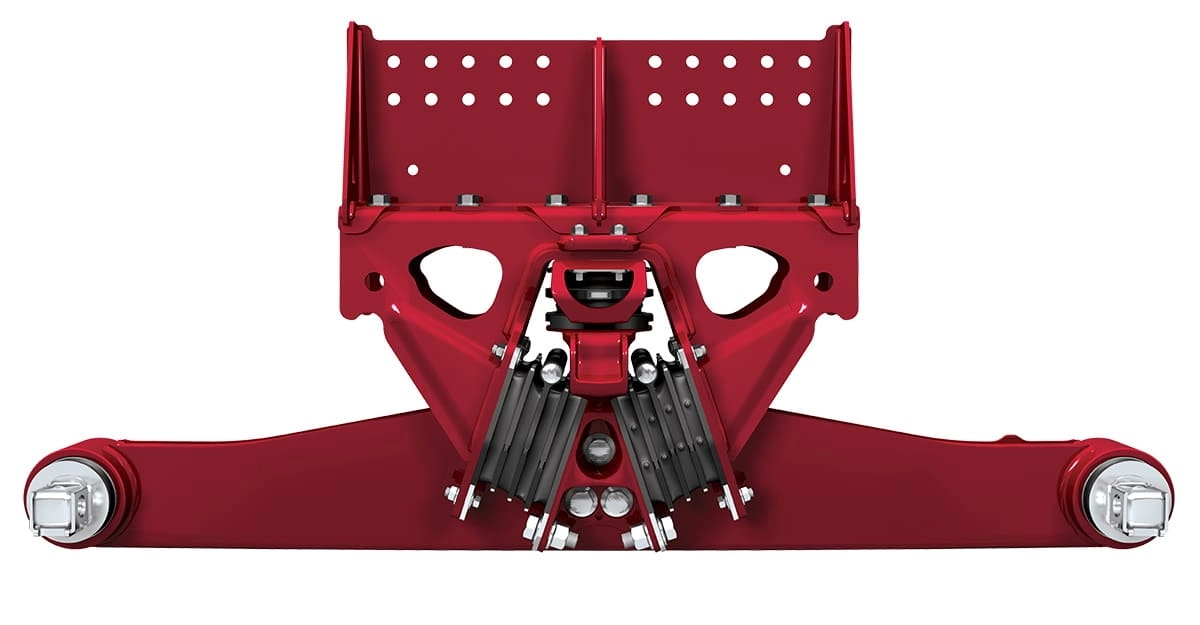
Now standard on the Kenworth T680, the AG400L is a 40,000-lb rated tandem rear suspension designed for the modern long-haul fleet.
- Technical Spec: A trailing-arm, four-bag system optimized for weight savings and disc brake compatibility.
- Key Benefits: The "L" stands for lightweight. By utilizing high-strength, lightweight castings, the AG400L allows for more freight. Its trailing arm design provides a smooth, "car-like" ride that keeps drivers comfortable during 11-hour shifts.
3. Kenworth AG460 and AG690 (Vocational and Heavy-Haul)
When the application moves from the interstate to the job site, the suspension must handle higher center-of-gravity loads and uneven terrain.
- AG460: A 46,000-lb tandem air ride that offers superior cross-articulation, ensuring tires maintain contact with the ground on jagged surfaces.
- AG690: A 69,000-lb tridem air-ride suspension. It is one of the most effective tri-drives in the industry, offering massive pulling power without the maintenance complexity of a front-drive axle.
Mechanical and Taperleaf Suspension Options
For some applications, simplicity and durability are more important than an adjustable air ride. Kenworth offers several mechanical options for these rigorous roles.
1. Taperleaf Front Springs
The standard front suspension on most Kenworth models is the Taperleaf spring. Unlike old "multi-leaf" stacks, Taperleaf springs use fewer, thicker leaves that are shaped to distribute stress more evenly.
- Benefits: They offer a much smoother ride than old-school springs while maintaining the "set-it-and-forget-it" reliability of mechanical steel.
2. Heavy-Duty Vocational Mechanical Suspensions
In extreme severe-service roles (logging, mining, or heavy construction), Kenworth utilizes high-capacity mechanical suspensions that use rubber springs or walking beams.
- Benefits: These systems are virtually indestructible and require almost no lubrication. They excel in "site travel" where the truck must navigate deep ruts and extreme articulation that could overextend an air bag.
Air vs. Mechanical: Which Benefit Matters Most?
Choosing between these Kenworth suspension types usually comes down to three operational factors:
Ride Quality and Driver Retention
Air suspensions like the AG400L are the gold standard for driver comfort. By absorbing road shocks before they reach the cab, these systems reduce physical driver fatigue and "body buzz." In a market where driver retention is everything, an air-ride Kenworth is a powerful recruiting tool.
Maintenance and Uptime
- Air Systems: Require periodic inspection of air lines and height control valves. However, proprietary Kenworth air rides are designed with few moving parts and often require zero periodic lubrication.
- Mechanical Systems: While they offer a rougher ride when empty, they are less susceptible to debris damage (e.g., a stick puncturing an air bag) and are generally cheaper to repair in a field setting.
Load Protection
If you haul sensitive cargo—such as electronics, glass, or perishable goods—air suspension is non-negotiable. The ability of the AirGlide series to maintain a constant ride height regardless of load weight prevents the "pogo-stick" effect that can damage fragile freight.
2026 Model Year Updates: The Future of Uptime
As we look toward the 2026 models, Kenworth continues to refine its suspension geometry to accommodate new alternative power platforms, such as the electric T880. These 2026 systems feature enhanced "Predictive Maintenance" sensors that can alert fleet managers via Kenworth TruckTech+ if a suspension component is beginning to show signs of irregular wear or pressure loss.
Conclusion: Spec the Best with Wallwork Truck Center
Selecting the right suspension isn't just about comfort; it's about the long-term profitability of your truck. Whether you prioritize the weight-saving advantages of the AG400L or the ruggedness of a vocational mechanical setup, Kenworth provides a solution engineered for "The World’s Best" performance.
At Wallwork Truck Center, our experts are ready to help you navigate the technical specifications to ensure your next truck is spec’d perfectly for your specific routes and loads.
Are you looking to optimize your fleet's ride quality?
Contact Wallwork Truck Center today to discuss our current inventory of Kenworth trucks or to start a custom build spec'd for your business.